
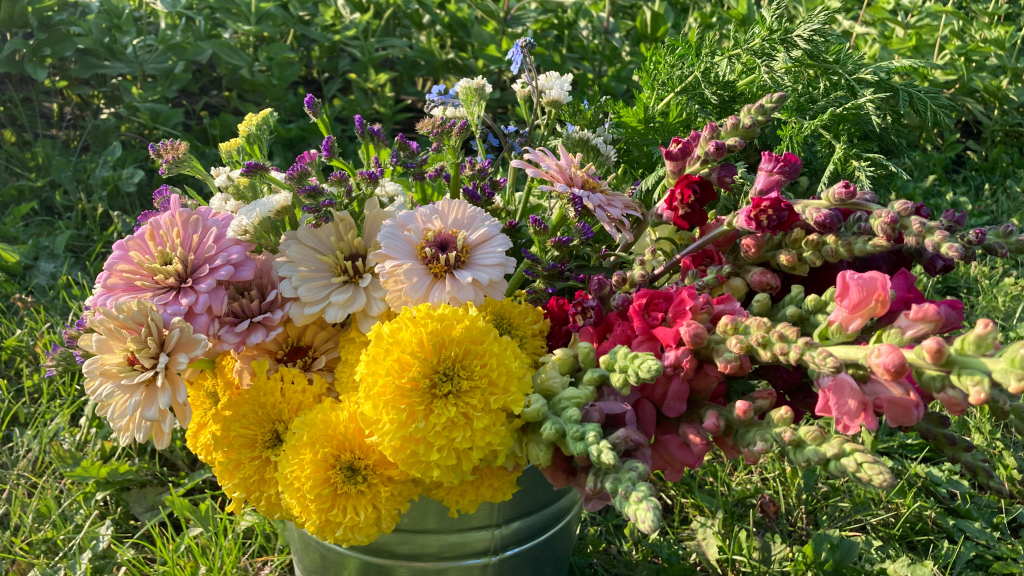
There is a huge push right now to buy things locally and it is awesome! In the United States, very few of the flowers that are found in big box or grocery stores are grown here. While beautiful, they are bred to be transported and by the time they arrive at the store they are already days old! The interest in flower farming has grown immensely in the last several years…. and I am part of that group. I only recently found my love for growing this incredible crop! While buying and supporting local growers is awesome, it is important for those growing cut flowers to know how to get the longest vase life from their flowers. While some of these tips may seem simple or silly, they really do make a difference when it comes to how long the flowers will last!
Use clean supplies
It is really important to clean your buckets or containers, vases, and snips. This helps to prevent diseases and avoids transferring bacteria to your plants. I wash buckets and vases in warm water with dish soap between every use. I also disinfect my snips with a disinfecting wipe. Many growers will also use a diluted bleach solution, but I find disinfecting wipes easier to use and more convenient for my scale.
Harvest at the right time of day.
The best time to harvest is in the morning, generally before it gets too hot. This is when the flowers are the most hydrated. Harvesting in the cooler temperatures will also help to prevent your plants from becoming shocked. If you are unable to harvest in the morning, the next best time is in the evening just before sunset. This again has to do with the cooler temperatures. Personally, I am not a morning person so I tend to harvest in the evenings and my plants do just fine as long as I follow the other recommendations in this post!
Harvest at the proper stage.
Different flowers have different recommended stages for harvest to ensure the longest vase life. For example sunflowers should be picked when the petals just start to unfurl while zinnias should be picked based on the “wiggle test” (hold the stem 6-8 inches down from the flower and wiggle-if it is floppy it isn’t ready but if it is stiff it’s ready to pick). It is important to do your research for each type of plant you are growing. Proper harvest stage is usually available either on the seed packet or on the website you ordered your seeds from. When all else fails, google works too! I have a binder with all of my flower info and I put a cheat sheet on the back cover with the proper picking stages for quick reference. My record keeping binder information and templates can be found here if that is something you are interested in!
Snip above a leaf set and strip the extra foliage.
Unless specified in the growing information for your plants, a general rule of thumb is to use a clean, sharp snips to cut the stems of your plants right above a set of leaves. This will encourage branching if it is a “cut and come again” variety. Remove any extra leaves or foliage from the stems before placing in water. The less foliage, the easier it is to work with when arranging and the easier it is for the plant to rehydrate.
Place immediately into water.
Cutting the stem of your plant encourages the plant to drink and rehydrate. Cut flowers and foliage should be placed into cool water as soon as possible to avoid stress and promote rehydration. I like to take pails of water out to the field with me to avoid any delay. Picking also tends to take longer than planned so it’s nice to be able to place them into water right away. My husband’s grandma lives across the road from the flower field and she often comes and helps with getting the plants into the water right away. She is also a pro at fitting way more plants into the buckets than should probably be in there because I tend to pick more than I have room for HAHA! 🙂
Allow plants to rest and rehydrate.
After completing the harvest, ensure plants have a couple of inches of cool water in the bottom of the bucket and move to a cool, dark place for them to rest. I place my buckets in a basement room without windows and allow them to sit overnight. If you pick in the morning, allow them to rest at least until the evening before arranging. The cool, dark location allows the plants to focus their energy on rehydrating which will help prolong vase life.
Know how to properly store specific plants.
While storing my flowers in my dark, cool basement works for the types of flowers I grow, some plants prefer to be stored in a cooler. Snapdragons also last longer in a cooler and I have tried storing them in a mini fridge with success! I generally have a turn around time of only 2-3 days on my cut flowers, so long term storage isn’t necessary. Tulips and ranunculus are two more examples of flowers that do better if stored in a cooler. Zinnias should not be stored in a cooler. Again, it is important to do your research and know what is best for your specific plants!
I should also quickly mention holding solutions. Many growers utilize holding solutions in their water to encourage the plants to hydrate and extend the time they can be stored. Again, I have no experience with this and have always only used water which works well for my situation! If you are interested in holding flowers for longer, it may be something worth checking into!
Recut ends after arranging (unless specified).
Recutting the ends of the stems after arranging will look nicer, make the bouquet’s stems easier to get into water, and help to encourage rehydration! Similar to in the field, cutting the stem encourages the plant to drink more water and rehydrate. Some flowers, such as daffodils, excrete a sap after stems are cut which is toxic to other plants and therefore should be placed in a separate water source or bucket and ends should not be recut if arranging with other flower varieties.
Rehydrate and allow to rest after arranging.
Similar to before, after arranging and cutting the stems again your plants will do better if allowed some time to rehydrate. While I don’t always bring my arranged flowers back to the basement to rest, I do make sure they have plenty of cool water and I try to keep them out of the sunlight as much as possible.
I hope this is helpful! Growing cut flowers is such a rewarding process. While it is important to strive for the longest vase life regardless of what you plan to do with your flowers, it is especially important if you are looking to sell them. If harvested properly, locally grown flowers should last as long if not longer than grocery store flowers. Besides, you have already put all of this work into growing the beauties, why not enjoy them for as long as possible?! Happy gardening! 🙂

 Life on Lady Slipper Lane
2 responses to “A Grower’s Guide to Making Cut Flowers Last”
OMG! I especially love and appreciate this informative post! Made me feel like an important part of this beautiful process!
LikeLiked by 1 person
Thank you 🙂
LikeLike